Understanding Anaheim's Unique Soil Composition
Anaheim sits in a fascinating geological zone where three distinct soil types converge, each presenting its own set of challenges for concrete installations and long-term durability. The city's foundation consists primarily of sandy alluvium deposited by ancient waterways, combined with hillside clay deposits in elevated areas, and a complex network of tree root systems that have developed over decades. Understanding these soil characteristics is essential for any homeowner planning a new concrete project or dealing with existing damage.
Sandy alluvium, the predominant soil type in much of Anaheim, is composed of fine sand particles with minimal clay content. While this soil type offers excellent drainage and doesn't expand significantly with moisture, it lacks the stability and load-bearing capacity of more compacted earth. When concrete is poured directly over sandy alluvium without proper base preparation, the underlying soil can shift and settle unevenly. This differential settlement is one of the primary culprits behind the concrete repair calls we receive throughout the region. The sand particles gradually compact over time, especially under the weight of vehicles on Concrete Driveways, creating voids beneath the surface that eventually lead to cracking and surface deterioration.
Expansive Clay in Anaheim Hills: A Hidden Threat to Your Concrete
In the hillside areas surrounding Anaheim, particularly in developments built on elevated terrain, expansive clay poses a more serious and complex problem than sandy alluvium. Expansive clay, also known as montmorillonite clay, has a remarkable ability to absorb moisture and expand significantly in volume. During wet seasons or after heavy irrigation, this clay swells, exerting tremendous pressure on any concrete structure built above it. Conversely, during dry periods, the clay contracts, creating gaps and voids that cause concrete to crack, settle, and shift. This cyclical expansion and contraction is relentless, and it's one of the most common causes of concrete repair needs in Anaheim's hillside communities.
Homeowners in areas with expansive clay in Anaheim Hills often notice a distinctive pattern of damage: diagonal cracks that radiate from the center of a driveway or patio, or step cracks along the edges where the concrete has shifted. These aren't just cosmetic issues; they indicate active soil movement beneath the surface. The challenge with expansive clay is that it requires specialized foundation and base preparation techniques to minimize damage. Proper grading, drainage systems, and sometimes even soil stabilization treatments are necessary before pouring concrete in these areas. Without these precautions, even the highest quality concrete will eventually fail under the pressure of expanding clay.
Tree Root Sidewalk Damage: When Nature Meets Concrete
Mature trees are one of Anaheim's greatest assets, providing shade, beauty, and environmental benefits. However, tree roots seeking water and nutrients can become a significant threat to concrete surfaces, particularly sidewalks, patios, and driveways. As roots grow and expand beneath the soil surface, they exert upward pressure on concrete slabs, causing them to heave, crack, and become uneven. This is especially problematic in older neighborhoods where large shade trees have had decades to develop extensive root systems. The roots don't necessarily need to be directly beneath the concrete; they can grow laterally for considerable distances and still cause damage to surfaces several feet away.
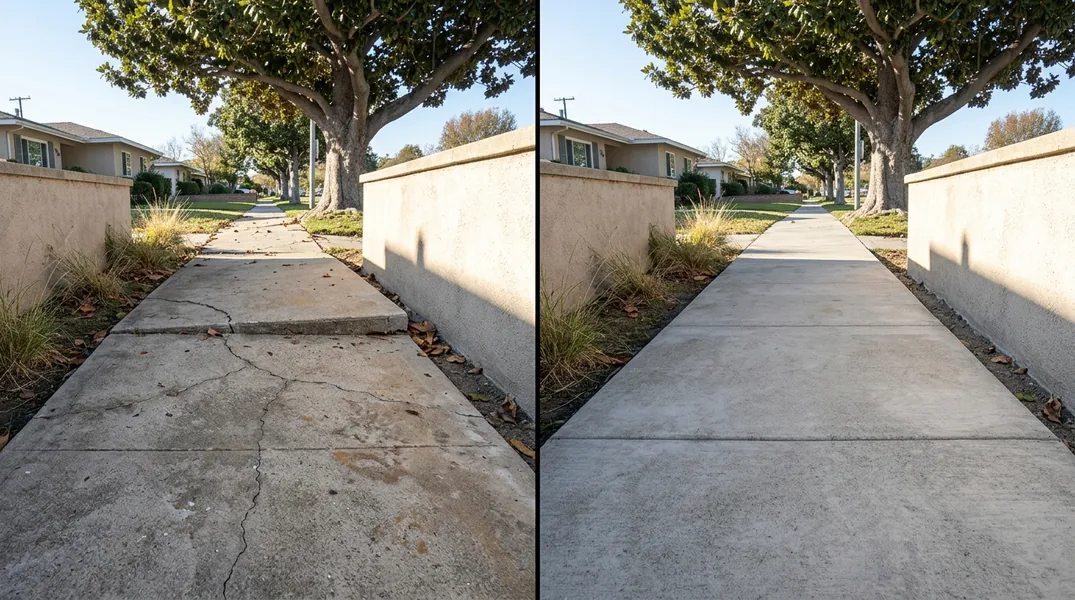
One of the most common scenarios we address is when tree roots have grown beneath a concrete driveway or sidewalk, creating a pronounced hump or ridge that makes the surface uneven and potentially hazardous. This type of damage is particularly frustrating because simply removing the tree isn't always an option, as it may be a beloved landscape feature or protected by local ordinances. The solution typically involves either Concrete Repair & Resurfacing to address the immediate damage, or in some cases, removing and replacing the affected section of concrete with a new installation that accounts for the ongoing root growth. Root barriers and proper drainage management can help minimize future damage, but they require professional assessment to implement correctly.
How Soil Movement Causes Concrete Cracking in Anaheim
Concrete cracking in Anaheim is rarely due to poor concrete quality alone. In most cases, the root cause is soil movement, whether from sandy alluvium settling, expansive clay expanding and contracting, or tree roots pushing upward. When soil beneath a concrete slab shifts, the concrete is forced to move with it. Since concrete is a rigid material with limited flexibility, it responds to this stress by cracking. The pattern and severity of cracks can tell us a lot about what's happening beneath the surface. Hairline cracks that appear randomly across a surface might indicate natural shrinkage or minor settling, while larger structural cracks suggest more significant soil movement or foundation problems.
The challenge with Anaheim soil concrete cracking is that it often appears to happen suddenly, even though the underlying conditions have been developing for months or years. A homeowner might notice a small crack and assume it's minor, only to find that within a few months, the crack has widened or new cracks have appeared. This progression indicates ongoing soil movement that requires professional evaluation. Ignoring these warning signs can lead to more extensive damage and more costly repairs down the road. The key is to have any significant cracking assessed by a professional who understands local soil conditions and can recommend appropriate solutions.
Concrete Repair Solutions for Anaheim's Challenging Soil Conditions
When concrete damage occurs in Anaheim, the repair approach must account for the underlying soil conditions that caused the damage in the first place. Simply filling a crack or resurfacing a damaged area without addressing the root cause is a temporary fix that will ultimately fail. Professional Concrete Repair & Resurfacing services begin with a thorough assessment of soil conditions, drainage, and the nature of the damage. For minor settling issues over sandy alluvium, solutions might include mudjacking or polyurethane injection to lift and stabilize the concrete. For expansive clay problems, more comprehensive approaches may be necessary, such as improving drainage, installing root barriers, or in severe cases, removing and replacing the affected concrete with proper base preparation.
The pricing for concrete repairs varies significantly depending on the underlying cause and the extent of damage. A simple crack repair might cost a few hundred dollars, while addressing expansive clay issues or extensive tree root damage could require more substantial investment. The best approach is to address problems early, before they become severe. If you've noticed cracking, settling, or other signs of concrete damage, reaching out for a free estimate is the smart first step. Our team at Anaheim Concrete can assess your specific situation, identify the soil-related causes, and recommend the most effective and cost-efficient solution. Call us at (657) 300-4942 to discuss your concrete concerns today.
Prevention: Building Concrete Right for Anaheim's Soil
The best approach to dealing with Anaheim's challenging soil conditions is prevention through proper installation techniques. When new Concrete Driveways or Concrete Patios are installed, the quality of the base preparation is just as important as the concrete itself. In areas with sandy alluvium, this means creating a stable, properly compacted base layer that won't shift over time. In hillside areas with expansive clay, it requires specialized techniques such as improved drainage systems, proper grading to direct water away from the concrete, and sometimes even soil stabilization treatments. For properties with mature trees, root barriers can be installed to direct root growth away from concrete surfaces, and strategic pruning can reduce the pressure from expanding root systems.
When you're planning any new concrete project in Anaheim, choosing a contractor who understands local soil conditions is essential. Not all concrete contractors have the expertise to design installations that account for expansive clay, sandy alluvium, and tree root issues. At Anaheim Concrete, we've spent years working in this region and have developed proven methods for building concrete structures that last. Whether you're installing new driveways, patios, or decorative concrete surfaces, we take soil conditions into account from the initial planning stage. If you're considering a new concrete project and want to ensure it's built right for Anaheim's unique environment, contact us at (657) 300-4942 or visit our website to request a free estimate.
Looking for a professional concrete contractor in Anaheim? Anaheim Concrete responds fast for all your concrete needs.
Get a Free QuoteOur services: Concrete Driveways · Concrete Patios · Stamped & Decorative Concrete